Yes, get that dirt off your shoulder.
Thursday, April 17, 2008


Monday, April 14, 2008
Sunday, March 23, 2008
This kind of interests me as a 3-D Geek
The Depth Mapping aspect of this new camera, if it works, might make 3-D composite not only a snap, but something you can do at home. The implications are really staggering.
But of course, the first law of technology is, it never turns out how you expected.
Then again, the corollary to that is turning out how you expected is unexpected, and so anticipateable outcomes also full under this category.
But of course, the first law of technology is, it never turns out how you expected.
Then again, the corollary to that is turning out how you expected is unexpected, and so anticipateable outcomes also full under this category.
Saturday, December 15, 2007
My opinion about Fansubbing and DVD sales
I download fansubs every now and then, so I got some stake in this argument. However, I am interested in buying DVDs. My policy is to delete files once I have watched them, but here's something I would say: the big problem is that people like me cannot afford the premium at which most anime series are sold.
Anime series tend to market at above the cost of a typical DVD, and in what I think is really a hangover from the days of VHS distribution, are split between a number of different, separate DVDs. Contrast this with the way most DVDs of traditional series are sold in America: that is, season by season. It's an inefficient business model, especially when the long term arcs of the series are of great interest to the consumer. Some would say you want consumers to jump through hoops, but the real problem with that is that the hoops are seen as unnecessary, and you have a difficult to control, and much easier alternative on the side.
So what to do?
The best way to do this, I think, is to do what music producers did not do until it was too late: provide a nice, safe legal means for people to do what they do now.
And what do fansubs do? Quick and dirty distribution of high quality anime, within days of broadcast, free of charge. Is this impossible for the corporations in Japan? It's not for the fansubbers. These people, for the love of it, get these things done in hours. I have complete faith that folks who get paid to do this could very easily repeat such feats.
Even if the delay were more like a week, I think something still could be managed. The key here is to understand the paradigm by which both movie and music distribution became online-free-for-alls.
Ask yourself: what is it here that these online means of distribution resemble, aside from the on-demand feature? Radio and Television. Tune in, and depending on whether people pay a premium or not, they can see all kinds of different movies and television shows with no out of pocket cost beyond a monthly bill.
The one big barrier, it seems, to doing all this in a timely manner, is not translation, but dubbing. The need to dub each and every show before it hits our shores is a huge part of both the overhead and the delay in getting this product to these shores. Is dubbing necessary, at least at that stage?
No. It's a nice thing to have, for many people, but the explosive growth of fansubbing demonstrates that it is not necessary to folks for their enjoyment. To get their anime now, in plentiful supply, and follow the stories in progress, people are willing to read the translation at the bottom of the screen. Observing the history of Anime in America, we can see that visuals and story are the primary draws here, not the English language. The conventional wisdom is that people will not go to see a movie drenched in subtitles. Yet people go to see movies like Crouching Tiger, Hidden Dragon, The Passion of The Christ, Kung Fu Hustle, and many others like them, with little complaint. Heck, the second of the two is written in a couple of dead languages, and the audience didn't seem to mind!
It might be a minus if you're marketing crap, but then that's your fault.
People don't need perfect translations or English dubs to want to seek out and enjoy anime on a near real time basis. Give them a subtitled translation, and they'll watch.
So what am I suggesting?
Two routes of distribution present themselves, so long as the people are willing to do things a little quick and dirty: Digital TV and Streaming Internet distribution, with both premium channel models that remove commercials, and basic channel models that include American commercials from American sponsors.
DVDs can then become what they are for most American shows: a way to milk the cow for those who truly do like what they see. The dubs for these shows can be come a part of the premium package of documentaries and other extras that DVDs are beloved for. You either end up justifying the higher price by making it a premium item, or by giving yourself the kind of volume through your primary broadcasts and webcasts that allows you to price them lower and still reap a profit.
The thing to keep in mind is that recorded mediums have always been premium items. Unfortunately, recorded mediums and distributive mediums are no longer as different in real terms. In certain markets, this used to provide a kind of premium priceability to the market- you either get it here, or nowhere else. The reality of today's market, is that people are now capable, either through legitimate means or not, of bypassing this.
Sooner or later, we have to face the globalizing consequences of digital convergence. You have to realize that you have a product that people want, and your main business model can no longer depend on any ability to keep it from them. Like Luke Skywalker says to Jabba the Hutt in Return of the Jedi, you can either profit from this, or be destroyed.
Profit from people's immediate desire for this product, then profit from their wish to have a deluxe version of the shows they really liked. Indeed, you can measure the ratings that shows get to find where the market's heading.
In the end, the only way to get past fansubbing, is to become the fansubbers yourself, and make it a workable commercial model. That is what I am suggesting here.
Anime series tend to market at above the cost of a typical DVD, and in what I think is really a hangover from the days of VHS distribution, are split between a number of different, separate DVDs. Contrast this with the way most DVDs of traditional series are sold in America: that is, season by season. It's an inefficient business model, especially when the long term arcs of the series are of great interest to the consumer. Some would say you want consumers to jump through hoops, but the real problem with that is that the hoops are seen as unnecessary, and you have a difficult to control, and much easier alternative on the side.
So what to do?
The best way to do this, I think, is to do what music producers did not do until it was too late: provide a nice, safe legal means for people to do what they do now.
And what do fansubs do? Quick and dirty distribution of high quality anime, within days of broadcast, free of charge. Is this impossible for the corporations in Japan? It's not for the fansubbers. These people, for the love of it, get these things done in hours. I have complete faith that folks who get paid to do this could very easily repeat such feats.
Even if the delay were more like a week, I think something still could be managed. The key here is to understand the paradigm by which both movie and music distribution became online-free-for-alls.
Ask yourself: what is it here that these online means of distribution resemble, aside from the on-demand feature? Radio and Television. Tune in, and depending on whether people pay a premium or not, they can see all kinds of different movies and television shows with no out of pocket cost beyond a monthly bill.
The one big barrier, it seems, to doing all this in a timely manner, is not translation, but dubbing. The need to dub each and every show before it hits our shores is a huge part of both the overhead and the delay in getting this product to these shores. Is dubbing necessary, at least at that stage?
No. It's a nice thing to have, for many people, but the explosive growth of fansubbing demonstrates that it is not necessary to folks for their enjoyment. To get their anime now, in plentiful supply, and follow the stories in progress, people are willing to read the translation at the bottom of the screen. Observing the history of Anime in America, we can see that visuals and story are the primary draws here, not the English language. The conventional wisdom is that people will not go to see a movie drenched in subtitles. Yet people go to see movies like Crouching Tiger, Hidden Dragon, The Passion of The Christ, Kung Fu Hustle, and many others like them, with little complaint. Heck, the second of the two is written in a couple of dead languages, and the audience didn't seem to mind!
It might be a minus if you're marketing crap, but then that's your fault.
People don't need perfect translations or English dubs to want to seek out and enjoy anime on a near real time basis. Give them a subtitled translation, and they'll watch.
So what am I suggesting?
Two routes of distribution present themselves, so long as the people are willing to do things a little quick and dirty: Digital TV and Streaming Internet distribution, with both premium channel models that remove commercials, and basic channel models that include American commercials from American sponsors.
DVDs can then become what they are for most American shows: a way to milk the cow for those who truly do like what they see. The dubs for these shows can be come a part of the premium package of documentaries and other extras that DVDs are beloved for. You either end up justifying the higher price by making it a premium item, or by giving yourself the kind of volume through your primary broadcasts and webcasts that allows you to price them lower and still reap a profit.
The thing to keep in mind is that recorded mediums have always been premium items. Unfortunately, recorded mediums and distributive mediums are no longer as different in real terms. In certain markets, this used to provide a kind of premium priceability to the market- you either get it here, or nowhere else. The reality of today's market, is that people are now capable, either through legitimate means or not, of bypassing this.
Sooner or later, we have to face the globalizing consequences of digital convergence. You have to realize that you have a product that people want, and your main business model can no longer depend on any ability to keep it from them. Like Luke Skywalker says to Jabba the Hutt in Return of the Jedi, you can either profit from this, or be destroyed.
Profit from people's immediate desire for this product, then profit from their wish to have a deluxe version of the shows they really liked. Indeed, you can measure the ratings that shows get to find where the market's heading.
In the end, the only way to get past fansubbing, is to become the fansubbers yourself, and make it a workable commercial model. That is what I am suggesting here.
Friday, December 14, 2007
A Small Enviromental Idea
I think it would be in our best interests as a nation to make recycling a priority. I know, it sounds cheesy, but when you really think about it, we're chucking a hell of a lot of resources, including petrochemicals, plastics, paper, metal, and other items which we will then have to replace by pumping up some oil, mining some metal, or doing some other kind of work.
I know, also a bit of a cliche. But when you take a trip out to the local landfill, drive up a small mountain of former landfill to get the current part, and it is itself quite immense, you just have to think about just how much of our resources end up lost to us in a place like this.
We might end up, at some point in the future, using the wonders of nanotechnology to pick through what we once considered disposable. How much of our own garbage do we want to be picking through, and how soon?
I know, also a bit of a cliche. But when you take a trip out to the local landfill, drive up a small mountain of former landfill to get the current part, and it is itself quite immense, you just have to think about just how much of our resources end up lost to us in a place like this.
We might end up, at some point in the future, using the wonders of nanotechnology to pick through what we once considered disposable. How much of our own garbage do we want to be picking through, and how soon?
Monday, October 01, 2007
Digital photography and Body Consciousness
I recently discovered some things about the way programs like Adobe Photoshop can be used to alter the way a person looks, and I think we should consider the implications of these facts in determining our expectations of our own bodies.
Men and women both stare at photos in magazines and lament that they can't have the perfect bodies they see there. What some of them may not realize is the extent to which these photos might be touched up. Heavily. Blemishes can be removed with the touch of a button, inconvenient curves distorted and erased, shadows and highlights reworked to add definition to muscles, perfection to skin. Blurring techniques can clear up complection, and even eyes can be moved about, if need be, to get that perfect look.
In the age of Photoshop, it's worth considering that almost no photography done professionally comes out in a national publication without extensive retouching.
Especially when it comes to being thin. As if the mounds of exercise, skimpy diets or other methods are not enough, those retouching glamour shots often use the tools to smooth away the places where the flesh bunches up where it shouldn't.
In short, we're making our assumptions about what thin looks like based on a digital fiction.
Here's a simple point to be made: the camera always lies. With Photoshop, and other image editing programs, it makes it even better at lying.
So what are we to do, raid the downtown headquarters of the modeling agencies, burn it to the ground? No. We have to change our attitudes about what these images mean. With documentary photography, of course, we should not accept much more than a few technical fixes for clarity. But beyond that, we should keep this one important point in mind: these are forms of communication, not necessarily representations of the truth.
The models in these shots do plenty of work to get their bodies in shape. They probably take up their whole lives in this. Rare ones can get away with doing little exercise and still eat like a normal person, but for the most part, this is a job. Even so, it's revealing that even as they best approximate our ideas of perfection, these people still must be retouched and reshaped in order to meet that ideal.
So let's get clear on this: the people commissioning and taking these shots are not representing reality, they are communicating something to you, something the models, the photographer, the program and the digital artist come together to shape. They are distilling something that in reality would be far more mundane, if it weren't for the labor of all involved.
The inspiration for this post came from working on exercises in Photoshop Restoraton and Retouching, by Katrin Eismann. If you want to know just how much the photos we see are communication, and not reality, this is the book to teach you.
Men and women both stare at photos in magazines and lament that they can't have the perfect bodies they see there. What some of them may not realize is the extent to which these photos might be touched up. Heavily. Blemishes can be removed with the touch of a button, inconvenient curves distorted and erased, shadows and highlights reworked to add definition to muscles, perfection to skin. Blurring techniques can clear up complection, and even eyes can be moved about, if need be, to get that perfect look.
In the age of Photoshop, it's worth considering that almost no photography done professionally comes out in a national publication without extensive retouching.
Especially when it comes to being thin. As if the mounds of exercise, skimpy diets or other methods are not enough, those retouching glamour shots often use the tools to smooth away the places where the flesh bunches up where it shouldn't.
In short, we're making our assumptions about what thin looks like based on a digital fiction.
Here's a simple point to be made: the camera always lies. With Photoshop, and other image editing programs, it makes it even better at lying.
So what are we to do, raid the downtown headquarters of the modeling agencies, burn it to the ground? No. We have to change our attitudes about what these images mean. With documentary photography, of course, we should not accept much more than a few technical fixes for clarity. But beyond that, we should keep this one important point in mind: these are forms of communication, not necessarily representations of the truth.
The models in these shots do plenty of work to get their bodies in shape. They probably take up their whole lives in this. Rare ones can get away with doing little exercise and still eat like a normal person, but for the most part, this is a job. Even so, it's revealing that even as they best approximate our ideas of perfection, these people still must be retouched and reshaped in order to meet that ideal.
So let's get clear on this: the people commissioning and taking these shots are not representing reality, they are communicating something to you, something the models, the photographer, the program and the digital artist come together to shape. They are distilling something that in reality would be far more mundane, if it weren't for the labor of all involved.
The inspiration for this post came from working on exercises in Photoshop Restoraton and Retouching, by Katrin Eismann. If you want to know just how much the photos we see are communication, and not reality, this is the book to teach you.
Tuesday, July 17, 2007
Why I have always liked Harry Potter, Despite What the Snobs Say...
I have the good fortune of being one of the original readers of Harry Potter. As a science fiction and fantasy fan, I was on the look out for new authors, new works, and Potter fit in nicely. I don't remember how long the book spent on my shelf, but I remember picking it up when I first saw it at the Baylor Bookstore.
My reaction to the first book was that I wanted more. But before I go on, let me recall that her audience hasn't exactly been bereft of material to read in this genre. There have been plenty of predecessor series. There's the Prydain Series by Lloyd Alexander, featuring our favorite Assistant Pig Keeper. There's The Dark is Rising sequence by Susan Cooper, which featured a fine cast of characters, including Will Stanton, young man, yet one of the Old ones, and Bran, the strange Welsh kid with the surprising family connections. There's The Chronicles of Narnia, which recently got its own cinematic treatment. There are likely quite a few more, but my recollection escapes me, and I don't want to belabor the point too much. Others might undoubtedly recall others, and I'd be happy to hear about them.
And lets not forget Grimm's Fairy Tales, Hans Christian Anderson's work, and a multitude of others. Children's fantasy is a rich literary tradition.
Which may be part of the problem. Many works scorned in their day are grandfathered into later canons of literary greatness by readers with fond memories and nobody still alive to drop it in the waste basket as trash. Harry Potter has the problem that its, well...
New. Test of time, and what have you.
Maybe Potter will end up as a curiosity of our times, remembered mainly by enthusiasts and lovers of esoterica. But lets not forget, that a lot of people wrote in the old days for the same purpose they write today: Money, and because they love doing it.
Rowlingly obviously loves doing this. Her exquisite sense of detail would allow no other conclusion. She gave the cinematic translators of her work a magnificent headstart. Her plots are well organized, the dialogue fairly good. She takes care with how she reveals information, and the mysteries that form the heart of her novels are well organized. As for money, well she's getting a sh... well, a lot of it.
Alexandre Dumas, Victor Hugo, Charles Dickens, and many others wrote not for the future idolization of their art, but for the love and the profit of it. I know that's kind of a generalization, but if you look into the history of many of the authors of what we call canon, you'll find more than a few commercial works, more than few overripe works of popular fiction.
I will not say that Harry Potter Books will necessarily become literature in the years to come. That truly is beyond my ability to say. But I will say this: It's popular enough to have some staying power, on the basis of having soaked into to enough homes and libraries, and it's of good enough quality to ensure that folks who pick it up, whether it remains out and about or gathering dust on some distant shelf, will pick it up and read it. So it could join works like Robinson Crusoe, The Three Musketeers, Great Expectations and others on the lists.
But what's the deal with the lists anyways? I'm going to tell you a little secret here: The lists are an accident! There are plenty of works we could speak of that would not have gotten on them had the folks who determine canonicity now been in charge. I look at a lot of what people read as literature, and some of the work is genuinely good, some of it not. Today's literary elites focus so much on pushing a certain world view, a certain view of realism, surrealism, postmodernism, or whatever camp they lump themselves into, that they're missing the new canon of literature as it rolls by them. They'll pick up on something that resembles their world view, like Pullman's His Dark Materials, but they'll miss a great deal of the other stuff, because it doesn't fit their idea of what is worthy.
Now my brother's much further into the modern works that I am, or care to be, but I notice that often enough he picks works that have a sense of humor, rather than loading himself up with only depressing material. I can imagine that there's no accounting for taste, which is why all kinds of books enjoy success, but still, there are some observations I'd like to make.
Genre work, meaning the stuff that doesn't stick to absolute reality, has a bad rap. That said, There's artistry in creating new worlds, or at least in doing some refit to this one. We can see in the works of Salman Rushdie and others this kind of approach. Whether you call it magical realism, fabulism or whatever, popular authors of the literary canon often drop in for a visit to fantasy and sci-fi land. And why not?
People right stories to figure out what you could call the human condition. But just consider all the things that go into that- our civilization, our culture, our sensibilities. There's a lot of space in there for examination of things like our relationship to technology, to religion, to all kinds of things. Fantasy and sci-fi, world-building works in particular, have their own territory to explore, their own intuitive truth to uncover.
While the genres can be escapist, they can also act as kind of a strange loop, as Douglas Hofstadter would call it, whereby readers can escape to the other worlds and parallel dimensions, and nevertheless come back deepened for their frivolity, because they come back to know the place they are in for the first time. That's perhaps one of the things cultural elitists hate- that they lose the control of those minds, that these works so entrance readers as to take them away from what's real.
But what is real? As a political writer on Watchblog, I've noticed what can only be called a strong divergence between what different parties consider real. Its noticeable elsewhere. Now I am not a big fan of philosophies that say that there is no objective reality, only what is brought into existence by consensus of belief. I believe there is an objective reality, but that we all have subjective, incomplete understandings and perceptions of it. Reality as it exists may be objective, but reality as we perceive it is a different story. With all that in mind, though, it's still important to seek the best possible understanding of that objective reality, to go beyond the shell of our perceptions, the necessary illusions that they are.
Fantasy and Science fiction allow us to look at the way people think and deal with cultures without necessarily having to glance directly at our own.
There are magnificent reflections of human truths in Harry Potter, and I believe that this is part of its lasting appeal. The relationship between Dumbledore and Potter, Potter's development into adolescence, the petty rivalries and lifelong grudges of personal and professional life, carry into her books.
They, among other aspects of a narrative work, literary or otherwise, contribute to what could be called the experiential value of the work.
The processes of the human mind are complex, multifacet, and represent the difference between what one is told, what one is shown, and what one experiences. Art is about taking advantage of the methods by which we seek to understand the world as reality, and using it to communicate wisdom and knowledge about the world too complex or beyond the person's normal experience to understand. It is also about how we train our minds to deal with the world around us.
Harry Potter's world is complex enough to believe in, with characters that are complicated enough to play around believeably in this world as human beings, and not just ciphers for the author's feelings. In all our self-indulgence, we writers have a tendency sometimes to put our own feelings as greater than our readers, but the truth is, no matter what we do, the success of our work depends on how we engage our readers, and how well we do it. Some would like to fantasize about how they will draw in an audience, or how they should be drawing in the audience instead of some author who just got lucky (from their point of view), but the fact is, by entering the profession they have, they've put the fate of their stories from the get-go, and have to do that to make art or to make money.
So my advice to those who hate what Potter has done to literature is this: compete. Be dazzling storytellers. Be original. Don't be a cliche, regardless of whether you're literary or commercial in your inclinations. Have some fun, while you take the work seriously. Understand that without the audience, without the bridge you build to them in your words, your work, your imaginings are incomplete. Only when somebody puts down a book satisfied, having had a worthy experience, can the art and the commerce of your work be complete.
My reaction to the first book was that I wanted more. But before I go on, let me recall that her audience hasn't exactly been bereft of material to read in this genre. There have been plenty of predecessor series. There's the Prydain Series by Lloyd Alexander, featuring our favorite Assistant Pig Keeper. There's The Dark is Rising sequence by Susan Cooper, which featured a fine cast of characters, including Will Stanton, young man, yet one of the Old ones, and Bran, the strange Welsh kid with the surprising family connections. There's The Chronicles of Narnia, which recently got its own cinematic treatment. There are likely quite a few more, but my recollection escapes me, and I don't want to belabor the point too much. Others might undoubtedly recall others, and I'd be happy to hear about them.
And lets not forget Grimm's Fairy Tales, Hans Christian Anderson's work, and a multitude of others. Children's fantasy is a rich literary tradition.
Which may be part of the problem. Many works scorned in their day are grandfathered into later canons of literary greatness by readers with fond memories and nobody still alive to drop it in the waste basket as trash. Harry Potter has the problem that its, well...
New. Test of time, and what have you.
Maybe Potter will end up as a curiosity of our times, remembered mainly by enthusiasts and lovers of esoterica. But lets not forget, that a lot of people wrote in the old days for the same purpose they write today: Money, and because they love doing it.
Rowlingly obviously loves doing this. Her exquisite sense of detail would allow no other conclusion. She gave the cinematic translators of her work a magnificent headstart. Her plots are well organized, the dialogue fairly good. She takes care with how she reveals information, and the mysteries that form the heart of her novels are well organized. As for money, well she's getting a sh... well, a lot of it.
Alexandre Dumas, Victor Hugo, Charles Dickens, and many others wrote not for the future idolization of their art, but for the love and the profit of it. I know that's kind of a generalization, but if you look into the history of many of the authors of what we call canon, you'll find more than a few commercial works, more than few overripe works of popular fiction.
I will not say that Harry Potter Books will necessarily become literature in the years to come. That truly is beyond my ability to say. But I will say this: It's popular enough to have some staying power, on the basis of having soaked into to enough homes and libraries, and it's of good enough quality to ensure that folks who pick it up, whether it remains out and about or gathering dust on some distant shelf, will pick it up and read it. So it could join works like Robinson Crusoe, The Three Musketeers, Great Expectations and others on the lists.
But what's the deal with the lists anyways? I'm going to tell you a little secret here: The lists are an accident! There are plenty of works we could speak of that would not have gotten on them had the folks who determine canonicity now been in charge. I look at a lot of what people read as literature, and some of the work is genuinely good, some of it not. Today's literary elites focus so much on pushing a certain world view, a certain view of realism, surrealism, postmodernism, or whatever camp they lump themselves into, that they're missing the new canon of literature as it rolls by them. They'll pick up on something that resembles their world view, like Pullman's His Dark Materials, but they'll miss a great deal of the other stuff, because it doesn't fit their idea of what is worthy.
Now my brother's much further into the modern works that I am, or care to be, but I notice that often enough he picks works that have a sense of humor, rather than loading himself up with only depressing material. I can imagine that there's no accounting for taste, which is why all kinds of books enjoy success, but still, there are some observations I'd like to make.
Genre work, meaning the stuff that doesn't stick to absolute reality, has a bad rap. That said, There's artistry in creating new worlds, or at least in doing some refit to this one. We can see in the works of Salman Rushdie and others this kind of approach. Whether you call it magical realism, fabulism or whatever, popular authors of the literary canon often drop in for a visit to fantasy and sci-fi land. And why not?
People right stories to figure out what you could call the human condition. But just consider all the things that go into that- our civilization, our culture, our sensibilities. There's a lot of space in there for examination of things like our relationship to technology, to religion, to all kinds of things. Fantasy and sci-fi, world-building works in particular, have their own territory to explore, their own intuitive truth to uncover.
While the genres can be escapist, they can also act as kind of a strange loop, as Douglas Hofstadter would call it, whereby readers can escape to the other worlds and parallel dimensions, and nevertheless come back deepened for their frivolity, because they come back to know the place they are in for the first time. That's perhaps one of the things cultural elitists hate- that they lose the control of those minds, that these works so entrance readers as to take them away from what's real.
But what is real? As a political writer on Watchblog, I've noticed what can only be called a strong divergence between what different parties consider real. Its noticeable elsewhere. Now I am not a big fan of philosophies that say that there is no objective reality, only what is brought into existence by consensus of belief. I believe there is an objective reality, but that we all have subjective, incomplete understandings and perceptions of it. Reality as it exists may be objective, but reality as we perceive it is a different story. With all that in mind, though, it's still important to seek the best possible understanding of that objective reality, to go beyond the shell of our perceptions, the necessary illusions that they are.
Fantasy and Science fiction allow us to look at the way people think and deal with cultures without necessarily having to glance directly at our own.
There are magnificent reflections of human truths in Harry Potter, and I believe that this is part of its lasting appeal. The relationship between Dumbledore and Potter, Potter's development into adolescence, the petty rivalries and lifelong grudges of personal and professional life, carry into her books.
They, among other aspects of a narrative work, literary or otherwise, contribute to what could be called the experiential value of the work.
The processes of the human mind are complex, multifacet, and represent the difference between what one is told, what one is shown, and what one experiences. Art is about taking advantage of the methods by which we seek to understand the world as reality, and using it to communicate wisdom and knowledge about the world too complex or beyond the person's normal experience to understand. It is also about how we train our minds to deal with the world around us.
Harry Potter's world is complex enough to believe in, with characters that are complicated enough to play around believeably in this world as human beings, and not just ciphers for the author's feelings. In all our self-indulgence, we writers have a tendency sometimes to put our own feelings as greater than our readers, but the truth is, no matter what we do, the success of our work depends on how we engage our readers, and how well we do it. Some would like to fantasize about how they will draw in an audience, or how they should be drawing in the audience instead of some author who just got lucky (from their point of view), but the fact is, by entering the profession they have, they've put the fate of their stories from the get-go, and have to do that to make art or to make money.
So my advice to those who hate what Potter has done to literature is this: compete. Be dazzling storytellers. Be original. Don't be a cliche, regardless of whether you're literary or commercial in your inclinations. Have some fun, while you take the work seriously. Understand that without the audience, without the bridge you build to them in your words, your work, your imaginings are incomplete. Only when somebody puts down a book satisfied, having had a worthy experience, can the art and the commerce of your work be complete.
Sunday, April 01, 2007
Hexagon on Saturn?
I think I have a rough idea of what this atmospheric formation on Saturn might mean.
Water spun very fast in a bucket will take on hexagonal shape. The speed has a lot to do with things, and Saturn's winds are damn fast, over a thousand miles an hour.
 |
| hexagon |
Water spun very fast in a bucket will take on hexagonal shape. The speed has a lot to do with things, and Saturn's winds are damn fast, over a thousand miles an hour.
Wednesday, January 17, 2007

Thursday, December 28, 2006
Monday, October 30, 2006

Tuesday, October 24, 2006
A Digital Landscape
This was created in Bryce 5.0, and rendered in it as far as I know. Most of the time, when I do an animation, I usually export a geometry file to Lightwave, and do the animation there, but in this case, I was doing a still picture, and Bryce renders those pretty well. It's also got a dedicated system for doing textures, and I was going for that detail.



My First Movie
This was my first animation, done on an animation program called Lightwave. This was done on version 5.5. back in 2000 or 2001. The current version of this program? Version 9! That'll tell you how old this is.
Enjoy!
Sorry, I misunderstood the picasa interface. This is just a screencap. I'll work on getting this back up.
Okay, I looked at it, and so far, Picasa does not support video posting. New feature for updates, right?
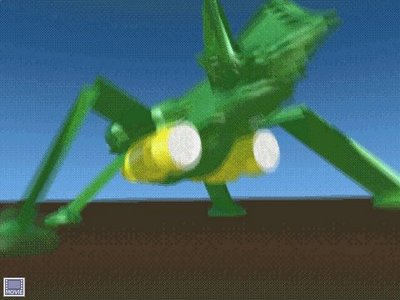
Enjoy!
Sorry, I misunderstood the picasa interface. This is just a screencap. I'll work on getting this back up.
Okay, I looked at it, and so far, Picasa does not support video posting. New feature for updates, right?

Friday, March 17, 2006
Marketing the Real
Language can be a femme fatale in Public Relations. The beautiful story is often the most dishonest. In the real world, the truth can be ugly. Words can be molded to create stories we want to believe, and which resist removal by factchecking, despite our better judgment.
I think this has something to do with the reconstructive nature of memory and imagination. A good story tells you just enough for you to use the rest of what you know and what you recall to fill in the gaps. Dishonest communications often play on this, grafting tales that have the intuitive flavor of correctness to our pre-existing knowledge, creating a robust combination that resists easy, uninformed skepticism, and reinforces false beliefs for the uncritical.
This phenomena aids those who want power, but who also like to treat it like a zero-sum game, where their customers, their constituents, and their investors are on the losing end.
The trouble is, lies become their own traps. An Enron executive or Bush Administration official who tried to act on what they knew to be true would find that their actions drew attention to their lies. Liars detest exposure, so they often are forced to avoid doing what's right in order to preserve the illusion that what they're telling people is true.
Acting on truth requires a culture prepared to take such action. In absence of the will to act on truth, the cultures develop to do what people are told to do, and to cover for the things that the liars do not want to see the light of day. Almost by default, that becomes an avoidance of truly productive behavior.
The price of cultural dishonesty is dysfunction, and all the evils that come with it. Worse still, the price is also the fact that one day one must turn back towards the right and the true, or face disaster. Like it says in Star Wars: Once you succumb to the darkside, it forever dominates your destiny.
What do you folks want to dominate your destiny?
I think this has something to do with the reconstructive nature of memory and imagination. A good story tells you just enough for you to use the rest of what you know and what you recall to fill in the gaps. Dishonest communications often play on this, grafting tales that have the intuitive flavor of correctness to our pre-existing knowledge, creating a robust combination that resists easy, uninformed skepticism, and reinforces false beliefs for the uncritical.
This phenomena aids those who want power, but who also like to treat it like a zero-sum game, where their customers, their constituents, and their investors are on the losing end.
The trouble is, lies become their own traps. An Enron executive or Bush Administration official who tried to act on what they knew to be true would find that their actions drew attention to their lies. Liars detest exposure, so they often are forced to avoid doing what's right in order to preserve the illusion that what they're telling people is true.
Acting on truth requires a culture prepared to take such action. In absence of the will to act on truth, the cultures develop to do what people are told to do, and to cover for the things that the liars do not want to see the light of day. Almost by default, that becomes an avoidance of truly productive behavior.
The price of cultural dishonesty is dysfunction, and all the evils that come with it. Worse still, the price is also the fact that one day one must turn back towards the right and the true, or face disaster. Like it says in Star Wars: Once you succumb to the darkside, it forever dominates your destiny.
What do you folks want to dominate your destiny?
Friday, March 10, 2006
The Idols of Human Logic
I'm a serious fellow. I've been told more than once in my life that I think too much, and probably have merited that assessment on a number of occasions. Being a person who can't help it, though, I do have the added benefit of knowing the limits of ivory tower logic, limits learned through hard-won experience.
There are benefits to being serious, to trying to reduce things in life to singular causes. If that weren't the case, our society wouldn't be what it is today, with our highly refined, well developed technology. With that in mind, even scientists are finding that some systems cannot be well understood from their component's characteristics alone. We call those kinds of systems, which are quite common in the real world emergent.
Trouble is, much of our philosophy and our attitudes are shaped by those centuries of time in which our culture alternated between romantic irreducibility, and pragmatic reductionism- people either believe that the world was a big mystery which the logic mavens did not understand half as much as they liked to believe, and those who believed the Romantics overlooked much of the undergirding order of the world. The cliche of both being right and both being wrong applies here.
It's not a very meaningful way of approaching things, on either end or in the middle. Additionally, neither side really has an approach that takes advantage of the way things really work. Of course, you could say each side must necessarily be an abstraction of the way people really work, and I guess you could say that is true. Unfortunately, in times of stress, people can sometimes run home to their philosophical momma, and start applying their perspective on the world with a vengeance.
America prospers, I think, in large part because it doesn't allow one way of thinking to exclusively rule the roost. From individual freedom emerges a robust discourse, with redundant backups, if you will, ready to take over when the former majority opinion loses favor. Some, though, react to that prospect with fear, and so try and push their ideas relentlessly.
We see such a situation in politics today, but not just there. We see it in the arts, particularly in the movie business. We see it in business culture, and even in religion. We see people who believe that they can reduce the good conduct of all these things to a list of rules, or at the very least a philosophical system.
Folks try to apply scientific methods (scientific in that they draw a conclusion by scholarly and/or systematic methods) to enterprises that are quite human in character. It can work to a certain extent, but only to the extent that people are willing to be skeptical about their own conclusions and how they came to them.
In trying to unravel the character of the world we live in and the things in it, we must recognize that we human beings can imagine the counterfactual quite easily. We must also recognize that in dealing with our fellow human beings, there are some facts which cannot be freed from subjective perspective, but which nonetheless have as great if not greater influence on the way things work than the cold, hard facts themselves.
We're flawed creatures, who can misjudge the world around us. This is why we have to keep both our eyes and our minds open as we try to establish the character of the world around us. This is also why we must do this on a permanent basis.
Only when we allow ourselves an awareness of how fragile our hold on reality truly is do we appreciate what an intellectual sin it is to have no room for error or different opinion in our plans. We need our discourse to be more fluid. Critics of what I say here may point out that not all new or different ideas have equal quality. This is, in many ways, all too true- in fact, that sensibility informs my argument here. What must be understood, though, is that the approach I suggest is all-inclusive in its skepticism. Both new ideas and old can be and often are wrong, in part or in the majority.
In fact, if you take a long enough view, all our ideas are wrong, illusions that cause us to stray from appropriate action. You could in fact call this original sin, if you are religiously inclined, though you could also call it human fallibility if such a morally drenched term seems over the top. Either way, like a ship on the sea, there is the course we intend to take, and the direction our vehicle of thought takes on the seas of reality. It is important, every now and then, as a sailor might do on a long voyage, for us to gauge where we really are, where we're really going, and what conditions our journey is taking us into.
Which brings me to this point, and the reason I portray the necessary course of action as neverending: As with sailing, a course correction cannot erase the path the vessel has taken to that point, nor make the current position a different one in the blink of an eye. It can only serve to reorient ourselves towards the right course for the destination we seek.
The relief from the consequences of the errors we make, to the extent that we can have it, is dependent on the quality of our next assessment of the situation. We can get that wrong, and remain off course. Or, more worryingly, a change in the weather or in the certain conditions along the leg of a journey could invalidate the course we are on, forcing us to reconsider what if any path could bring us to our goal- that or dare the approach anyways, our pride justly or unjustly refusing to buckle against the obstacle.
Regardless of all that, finding the right course to take, maintaining it, and deciding whether to keep to it or abandon it, is a dynamic process, especially if we put a premium on getting things done right. The corrupt, the lazy, and the unmotivated find no reason to make a friend of change. To those who wish to get things accomplished, to fulfill the noble impulses, and to keep a system pure, change (or at least it's potential) is their best ally.
Change, though, is not achieved all at once, nor are our current means of bringing it about always the best. If this sounds like it complicates things, it does, but these are complexities that were there to start, like a car engine is under the hood. The exterior may allow us the illusion that the car is a simple, unified entity, but that doesn't change what we find beyond the chrome. What we are rendering more complex is our appreciation.
But the complexity does carry with it costs of mental overhead. We get into what Jack Cohen and Ian Stewart call Ant Country, where a reductionist approach leads us to bewildering uncertainty as to how to manage things. The fearful approach to Ant Country is part of what motivates people to react and move towards romanticism and it's philosophical relatives.
This brings us back to a quality that we've long neglected: judgment. Critical thinking, rather than just procedural. It's easy once we've fallen into our mental arrogance to head in this direction- after all, if you've figured it out, why bother wasting the effort to refigure things? But since our notion of things is often imperfect, it's necessary and advantageous for us to peer past the veil of ignorance that surrounds us and reassess things. What brings many to fear this is the requirement that one exercise personal, subjective judgment. It becomes a practical moral act, rather than the inevitable result of a process that can't be wrong as long as you follow it.
The trouble is, conditions can and often do change in the world, and many of the systems that we attempt to address with these approaches are both dynamic and emergent in their character. Even if such process works once, it doesn't necessarily follow that such processes will remain a way to do the right thing. The process can become not unlike the food pellet system in a lab rat's cage, rewarding folks for doing things a certain way arbitrary of true utility of their actions. This is the hidden trap of the market, of any political party, of any means of managing people that does not reward open eyes open minds, and a sustained involvement with the going-ons of the world.
We have to be willing to risk being wrong to do things right, and having taken that risk, we must face up to the consequences of our actions with integrity, courage, and humility. To wall ourselves off in process and argument will not preserve us from error, it will only serve to sustain us in it.
There are benefits to being serious, to trying to reduce things in life to singular causes. If that weren't the case, our society wouldn't be what it is today, with our highly refined, well developed technology. With that in mind, even scientists are finding that some systems cannot be well understood from their component's characteristics alone. We call those kinds of systems, which are quite common in the real world emergent.
Trouble is, much of our philosophy and our attitudes are shaped by those centuries of time in which our culture alternated between romantic irreducibility, and pragmatic reductionism- people either believe that the world was a big mystery which the logic mavens did not understand half as much as they liked to believe, and those who believed the Romantics overlooked much of the undergirding order of the world. The cliche of both being right and both being wrong applies here.
It's not a very meaningful way of approaching things, on either end or in the middle. Additionally, neither side really has an approach that takes advantage of the way things really work. Of course, you could say each side must necessarily be an abstraction of the way people really work, and I guess you could say that is true. Unfortunately, in times of stress, people can sometimes run home to their philosophical momma, and start applying their perspective on the world with a vengeance.
America prospers, I think, in large part because it doesn't allow one way of thinking to exclusively rule the roost. From individual freedom emerges a robust discourse, with redundant backups, if you will, ready to take over when the former majority opinion loses favor. Some, though, react to that prospect with fear, and so try and push their ideas relentlessly.
We see such a situation in politics today, but not just there. We see it in the arts, particularly in the movie business. We see it in business culture, and even in religion. We see people who believe that they can reduce the good conduct of all these things to a list of rules, or at the very least a philosophical system.
Folks try to apply scientific methods (scientific in that they draw a conclusion by scholarly and/or systematic methods) to enterprises that are quite human in character. It can work to a certain extent, but only to the extent that people are willing to be skeptical about their own conclusions and how they came to them.
In trying to unravel the character of the world we live in and the things in it, we must recognize that we human beings can imagine the counterfactual quite easily. We must also recognize that in dealing with our fellow human beings, there are some facts which cannot be freed from subjective perspective, but which nonetheless have as great if not greater influence on the way things work than the cold, hard facts themselves.
We're flawed creatures, who can misjudge the world around us. This is why we have to keep both our eyes and our minds open as we try to establish the character of the world around us. This is also why we must do this on a permanent basis.
Only when we allow ourselves an awareness of how fragile our hold on reality truly is do we appreciate what an intellectual sin it is to have no room for error or different opinion in our plans. We need our discourse to be more fluid. Critics of what I say here may point out that not all new or different ideas have equal quality. This is, in many ways, all too true- in fact, that sensibility informs my argument here. What must be understood, though, is that the approach I suggest is all-inclusive in its skepticism. Both new ideas and old can be and often are wrong, in part or in the majority.
In fact, if you take a long enough view, all our ideas are wrong, illusions that cause us to stray from appropriate action. You could in fact call this original sin, if you are religiously inclined, though you could also call it human fallibility if such a morally drenched term seems over the top. Either way, like a ship on the sea, there is the course we intend to take, and the direction our vehicle of thought takes on the seas of reality. It is important, every now and then, as a sailor might do on a long voyage, for us to gauge where we really are, where we're really going, and what conditions our journey is taking us into.
Which brings me to this point, and the reason I portray the necessary course of action as neverending: As with sailing, a course correction cannot erase the path the vessel has taken to that point, nor make the current position a different one in the blink of an eye. It can only serve to reorient ourselves towards the right course for the destination we seek.
The relief from the consequences of the errors we make, to the extent that we can have it, is dependent on the quality of our next assessment of the situation. We can get that wrong, and remain off course. Or, more worryingly, a change in the weather or in the certain conditions along the leg of a journey could invalidate the course we are on, forcing us to reconsider what if any path could bring us to our goal- that or dare the approach anyways, our pride justly or unjustly refusing to buckle against the obstacle.
Regardless of all that, finding the right course to take, maintaining it, and deciding whether to keep to it or abandon it, is a dynamic process, especially if we put a premium on getting things done right. The corrupt, the lazy, and the unmotivated find no reason to make a friend of change. To those who wish to get things accomplished, to fulfill the noble impulses, and to keep a system pure, change (or at least it's potential) is their best ally.
Change, though, is not achieved all at once, nor are our current means of bringing it about always the best. If this sounds like it complicates things, it does, but these are complexities that were there to start, like a car engine is under the hood. The exterior may allow us the illusion that the car is a simple, unified entity, but that doesn't change what we find beyond the chrome. What we are rendering more complex is our appreciation.
But the complexity does carry with it costs of mental overhead. We get into what Jack Cohen and Ian Stewart call Ant Country, where a reductionist approach leads us to bewildering uncertainty as to how to manage things. The fearful approach to Ant Country is part of what motivates people to react and move towards romanticism and it's philosophical relatives.
This brings us back to a quality that we've long neglected: judgment. Critical thinking, rather than just procedural. It's easy once we've fallen into our mental arrogance to head in this direction- after all, if you've figured it out, why bother wasting the effort to refigure things? But since our notion of things is often imperfect, it's necessary and advantageous for us to peer past the veil of ignorance that surrounds us and reassess things. What brings many to fear this is the requirement that one exercise personal, subjective judgment. It becomes a practical moral act, rather than the inevitable result of a process that can't be wrong as long as you follow it.
The trouble is, conditions can and often do change in the world, and many of the systems that we attempt to address with these approaches are both dynamic and emergent in their character. Even if such process works once, it doesn't necessarily follow that such processes will remain a way to do the right thing. The process can become not unlike the food pellet system in a lab rat's cage, rewarding folks for doing things a certain way arbitrary of true utility of their actions. This is the hidden trap of the market, of any political party, of any means of managing people that does not reward open eyes open minds, and a sustained involvement with the going-ons of the world.
We have to be willing to risk being wrong to do things right, and having taken that risk, we must face up to the consequences of our actions with integrity, courage, and humility. To wall ourselves off in process and argument will not preserve us from error, it will only serve to sustain us in it.
Sunday, January 22, 2006
Let's shed a little light on my extracurricular activities.
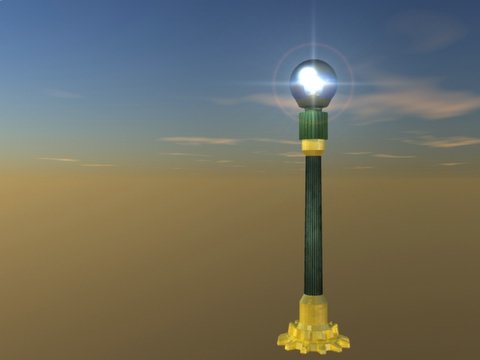
In the midst of all pontificating about politics and philosophy, it's understandably difficult to think of me for what I was trained at college to do: Make movies. Video. Digital Photograph, and as the character of that Image above demonstrates, Digital modelling and animation.
I will take some steps, at this point, to remedy this from time to time, now that I've found the means to do so. I hope this will serve two functions: give me an audience for my work, and give you an additional layer of meaning and enjoyment as a reader of this blog.
Wednesday, January 11, 2006
Opening Up to Our Non-Ideal Past and Present
We would like to think our ancestors were fair-minded, and harbored none of the out of favor biases of our age. That is the bias of our age. I believe our modern rejection of many of the sins of the past- racism, sexism, etc- are justifiable and noble in spirit, but they cannot change the fact that they were evolutions in thought from mindsets that were not free of these prejudices.
The tendency among some educators is to try and smooth these things over, conceal the extent to which western culture and our nation in particular once had these qualities. Frankly, I think that's a mistake.
This is especially true when dealing with the books of the past. Some folks commenting on The Chronicles of Narnia noted the sexism and the occasional racism dealing with the Arab/Muslim analogues known as the Calormenes, and held it rather harshly to task.
Were this a modern book, I could see where the criticism would be just. This is The Chronicles of Narnia, though, and it is representative of its times, not ours. It is the product of Mid-20th Century England, and all the attendant prejudices and values. Not all of these beliefs are alien to our own, but quite a few are guaranteed to be, because of the source of this work.
It's important that we recognize two things:
1)the intentions of authors in the past were like ours: good bad and indifferent.
and
2)That we ourselves are not perfect.
Our values didn't spring from nowhere. They are the result of how people thought and lived before us. We have the tendency as human beings to view the past through the lense of the present sometimes, and that is to some extent unavoidable. That said, we can be conscious of this tendency and take a compensatory approach in our analysis, or we can leave the numerous errors in that, and suffer the consequences of having such a distorted picture of things.
One such consequence is that we do not recognize these prejudices in ourselves. We assume the irrationality of racism, and forget that there are often very rational ways of justifying the bigoted and the unfair, traps for the unwary thinker. We ourselves probably hold such prejudices without even realizing it. Another consequence is that we will often shape our attitudes toward such groups in ways that allow us to believe that we are without blemish, but which nonetheless allow some form of uninformed belief through. Witness the blandly uncritical way some multiculturalist have of examining foreign societies, neglecting their darker sides, even while their opponents focus on nothing else.
The important thing to learn here is critical thought, and an appreciation for not just truth about how things are, but also about other's viewpoints. In trying to push toward a better and more just society, it is insufficient to understand one's own viewpoint alone. We need to understand what we we are persuading people from, as well as to. The thing is, it is difficult enough to understand other folk's points of view, if we fail to withold judgment until we understand their thinking in their own terms.
The tendency among some educators is to try and smooth these things over, conceal the extent to which western culture and our nation in particular once had these qualities. Frankly, I think that's a mistake.
This is especially true when dealing with the books of the past. Some folks commenting on The Chronicles of Narnia noted the sexism and the occasional racism dealing with the Arab/Muslim analogues known as the Calormenes, and held it rather harshly to task.
Were this a modern book, I could see where the criticism would be just. This is The Chronicles of Narnia, though, and it is representative of its times, not ours. It is the product of Mid-20th Century England, and all the attendant prejudices and values. Not all of these beliefs are alien to our own, but quite a few are guaranteed to be, because of the source of this work.
It's important that we recognize two things:
1)the intentions of authors in the past were like ours: good bad and indifferent.
and
2)That we ourselves are not perfect.
Our values didn't spring from nowhere. They are the result of how people thought and lived before us. We have the tendency as human beings to view the past through the lense of the present sometimes, and that is to some extent unavoidable. That said, we can be conscious of this tendency and take a compensatory approach in our analysis, or we can leave the numerous errors in that, and suffer the consequences of having such a distorted picture of things.
One such consequence is that we do not recognize these prejudices in ourselves. We assume the irrationality of racism, and forget that there are often very rational ways of justifying the bigoted and the unfair, traps for the unwary thinker. We ourselves probably hold such prejudices without even realizing it. Another consequence is that we will often shape our attitudes toward such groups in ways that allow us to believe that we are without blemish, but which nonetheless allow some form of uninformed belief through. Witness the blandly uncritical way some multiculturalist have of examining foreign societies, neglecting their darker sides, even while their opponents focus on nothing else.
The important thing to learn here is critical thought, and an appreciation for not just truth about how things are, but also about other's viewpoints. In trying to push toward a better and more just society, it is insufficient to understand one's own viewpoint alone. We need to understand what we we are persuading people from, as well as to. The thing is, it is difficult enough to understand other folk's points of view, if we fail to withold judgment until we understand their thinking in their own terms.
Friday, January 06, 2006
Christ in a Free Speech Society
Every few months or years, we hear about one program or another that's run afoul of the self-appointed Guardians of Christian Decency. Another news program runs with a story of how us nice Christians are pouring a nice warm glass of vitriol down the backs of yet another liberal/secular/atheist filmmaker. Another station cuts off an unwanted show unseen. Another movie gets picketed because it's content is offensive, sacreligious, or whatever else.
And what do we gain? A reputation as being stiflers of culture, backwards mouth-breathers whose anti-elitist sentiments drive us to tear down other in our intolerance. Worse yet, there's another unintentional effect. strong, or even casual religious expression in movies becomes radioactive, as both sides threaten filmmakers with boycotts and picketting for daring to put something more than lukewarm spirituality on.
In a way, we Christians are somewhat responsible for the lack of Christian content and religious values on the air. We simply make it not worth the trouble for people to get their hands dirty with it. Yet one movie after another successfully plays on themes present in religious material, and evokes spiritual sensibilities during their run times. What's going on? There's obviously a market for transcendance, for religious experience in the cinema and on television.
The thing is, though, we're not providing nearly enough of it. Typically, we're either getting ham-handed with it, making hysterically bad or mundane films. The real values of Christianity are not being presented in the dramatic fashion that values of character and philosophy are on a regular basis. Secular values, being more universal, and unradioactive enough to be regularly pondered upon, are presented with both greater grace and greater saturation. Artists and thinkers are encouraged among the more secular to think for themselves, to take exciting new directions. These are the things any culture should do, if they wish for it to remain alive in people's hearts and minds.
The solution of some folks is to surpress the offensive, but that not only carries with it the negative connotations, that encourages groupthink and stagnation, as people rest on their assumptions. For values-based thought to come back to the fore, it has to be more than a spirit of weak, didactic, message-sending. It has to be a full fledged dive into the problems and concerns from which our cultural responses emerge.
But to do that, we have to give people the freedom to mess up, and to say things we don't want them to say. We have to give the broadcasters and moviemakers the freedom from controversy that would encourage them to treat your average piece of cinematic religion as no big deal.
There are some who would worry that such an approach would encourage antagonistic messages. It could indeed, but that's the price of carrying messages that are antagonistic to other folk's beliefs. This has always been a matter of competition between different ideas, different views, and not usually in the neat sort of camp vs. camp fashion. The charisma of the different works is what carries them forward. Because of the vibrant cultural melieu that constitutes secular society in America, they are more free to experiment, to dare, to be visionaries. They can present movies to people that have power, narrative drive, which ask questions, and reveal new corners of humanity. Some may look at that and resent it, claiming that it represents an ominous temptation to the unwary. Whatever it is, though, we would be well advised to confront it with something else than just scorn. We need to confront it with a new culture of ideas and charismatic artistry of our own.
Otherwise, we have no excuse to talk about the direction our culture is taking, since we won't be doing enough to truly take it in another direction.
And what do we gain? A reputation as being stiflers of culture, backwards mouth-breathers whose anti-elitist sentiments drive us to tear down other in our intolerance. Worse yet, there's another unintentional effect. strong, or even casual religious expression in movies becomes radioactive, as both sides threaten filmmakers with boycotts and picketting for daring to put something more than lukewarm spirituality on.
In a way, we Christians are somewhat responsible for the lack of Christian content and religious values on the air. We simply make it not worth the trouble for people to get their hands dirty with it. Yet one movie after another successfully plays on themes present in religious material, and evokes spiritual sensibilities during their run times. What's going on? There's obviously a market for transcendance, for religious experience in the cinema and on television.
The thing is, though, we're not providing nearly enough of it. Typically, we're either getting ham-handed with it, making hysterically bad or mundane films. The real values of Christianity are not being presented in the dramatic fashion that values of character and philosophy are on a regular basis. Secular values, being more universal, and unradioactive enough to be regularly pondered upon, are presented with both greater grace and greater saturation. Artists and thinkers are encouraged among the more secular to think for themselves, to take exciting new directions. These are the things any culture should do, if they wish for it to remain alive in people's hearts and minds.
The solution of some folks is to surpress the offensive, but that not only carries with it the negative connotations, that encourages groupthink and stagnation, as people rest on their assumptions. For values-based thought to come back to the fore, it has to be more than a spirit of weak, didactic, message-sending. It has to be a full fledged dive into the problems and concerns from which our cultural responses emerge.
But to do that, we have to give people the freedom to mess up, and to say things we don't want them to say. We have to give the broadcasters and moviemakers the freedom from controversy that would encourage them to treat your average piece of cinematic religion as no big deal.
There are some who would worry that such an approach would encourage antagonistic messages. It could indeed, but that's the price of carrying messages that are antagonistic to other folk's beliefs. This has always been a matter of competition between different ideas, different views, and not usually in the neat sort of camp vs. camp fashion. The charisma of the different works is what carries them forward. Because of the vibrant cultural melieu that constitutes secular society in America, they are more free to experiment, to dare, to be visionaries. They can present movies to people that have power, narrative drive, which ask questions, and reveal new corners of humanity. Some may look at that and resent it, claiming that it represents an ominous temptation to the unwary. Whatever it is, though, we would be well advised to confront it with something else than just scorn. We need to confront it with a new culture of ideas and charismatic artistry of our own.
Otherwise, we have no excuse to talk about the direction our culture is taking, since we won't be doing enough to truly take it in another direction.
Friday, October 14, 2005
Planet Starbucks (or Stephen's Post about Naming Rights)
Fans of Fight Club will get the joke. For those who haven't seen it, the title relates to a passage where Edward Norton's unnamed narrator reflects on who will get the naming rights to the various places we will explore in space. The joke hits pretty close to home nowadays.
Virtually every sports arena you hear about nowadays has some corporations name attached to it. Every event has some company's name attached to it. We in Houston have Reliant Stadium, Reliant Astrodome, the Toyota Center (formerly Compaq Center) Minute Maid Park (formerly Enron Field, for reasons we're all aware of.).
I'm sure y'all folks have your own local example. They call it selling the naming rights. Yeck. I agree with capitalism, to be sure, and look forward to making plenty of money in the future, but when do we get a break from Business?
I remember when the custom was to name places permanently after either people (safely dead, most of the time), or after nice sounding locations or concepts. Calling it the Astrodome was fine and dandy without a power company's name attached. Calling a place "The Summit" was an acceptable name. Even Minute Maid Park (formerly Enron Field) had a nice evocative name before the juice started flowing: Union Station. Doesn't that sound American to you? Doesn't that sound like the proper name of a ballpark?
I know it makes money for people to sell these things, but they're selling so much anyways. There are whole industries worth of profits one can make without having to be so crass as to use an establishment's name to sell corporate awareness.
In the old days, names were intended to have some power, some resonance for people. They weren't intended to merely function as somebody's marketing. They had weight and oomph; most importantly, they had identity. The Astrodome. Even without the corporate name added, it's a place, a known quantity, an almost living thing in people's memories.
I remember times when that is what identified a place. I'm no big sports fan, but I can recall names like Wrigley Field, Soldier Field, and Yankee Stadium right off the top of my head. I'm sure readers could provide more examples.
As a society, I think we need more breathing room, more space between us and the constant presence of the workplace in our lives. In short, I think people need to relearn the meaning of free time. Not everything has to serve somebody's profit.
Virtually every sports arena you hear about nowadays has some corporations name attached to it. Every event has some company's name attached to it. We in Houston have Reliant Stadium, Reliant Astrodome, the Toyota Center (formerly Compaq Center) Minute Maid Park (formerly Enron Field, for reasons we're all aware of.).
I'm sure y'all folks have your own local example. They call it selling the naming rights. Yeck. I agree with capitalism, to be sure, and look forward to making plenty of money in the future, but when do we get a break from Business?
I remember when the custom was to name places permanently after either people (safely dead, most of the time), or after nice sounding locations or concepts. Calling it the Astrodome was fine and dandy without a power company's name attached. Calling a place "The Summit" was an acceptable name. Even Minute Maid Park (formerly Enron Field) had a nice evocative name before the juice started flowing: Union Station. Doesn't that sound American to you? Doesn't that sound like the proper name of a ballpark?
I know it makes money for people to sell these things, but they're selling so much anyways. There are whole industries worth of profits one can make without having to be so crass as to use an establishment's name to sell corporate awareness.
In the old days, names were intended to have some power, some resonance for people. They weren't intended to merely function as somebody's marketing. They had weight and oomph; most importantly, they had identity. The Astrodome. Even without the corporate name added, it's a place, a known quantity, an almost living thing in people's memories.
I remember times when that is what identified a place. I'm no big sports fan, but I can recall names like Wrigley Field, Soldier Field, and Yankee Stadium right off the top of my head. I'm sure readers could provide more examples.
As a society, I think we need more breathing room, more space between us and the constant presence of the workplace in our lives. In short, I think people need to relearn the meaning of free time. Not everything has to serve somebody's profit.
Subscribe to:
Posts (Atom)